
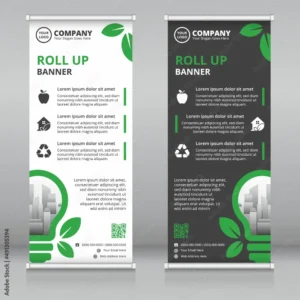
An eco-friendly custom roll-up offers a powerful, portable canvas for brands that value sustainability. By focusing on sustainable materials for roll-up banners and recyclable components, your display can reduce waste while delivering clear messaging. This approach also aligns with eco-friendly signage solutions that businesses are adopting at events and in retail spaces. Choosing recyclable roll-up banners and durable hardware supports reuse and end-of-life recycling, lowering overall environmental impact. While some vendors market biodegradable roll-up materials, the most reliable advantage comes from durable, recyclable systems designed for long-term reuse.
More broadly, this concept translates into green banner systems and reusable display setups designed for multi-event use. Consider signage options that allow graphics to be swapped without discarding the entire unit, and substrates that lean on recycled content or bio-based materials paired with low-VOC inks. These choices mirror a circular-economy mindset, prioritizing take-back programs, modular designs, and materials that can be separated and recycled at end of life. When evaluating vendors, seek transparency about material streams, lifecycle data, and third-party certifications that validate sustainability claims.
Leveraging an eco-friendly custom roll-up for sustainable signage
As brands intensify their commitment to sustainable practices, an eco-friendly custom roll-up becomes a practical, high-impact tool for communicating your message while reducing waste. Selecting substrates derived from post-consumer plastics or bio-based materials can help align your signage with a circular economy and lower the overall environmental footprint.
To maximize impact, pair this banner with recyclable roll-up banners and a graphics refresh strategy that uses replaceable panels. Look for vendors offering take-back options and ensure end-of-life pathways exist for the entire system, not just the substrate, so the display can be refurbished or recycled at scale.
Sustainable materials for roll-up banners
When evaluating sustainable materials for roll-up banners, prioritize options like recycled PET fabrics or films derived from post-consumer plastics, along with polypropylene alternatives that reduce virgin plastic use. These materials enable higher recyclability at the end of a product life cycle without sacrificing print quality or durability.
Bio-based or recycled content substrates, combined with water-based inks and coatings, can lower VOC emissions and improve indoor air quality at events. While biodegradable roll-up materials are sometimes marketed as a solution, they often require specialized industrial composting streams; for most applications, durable, recyclable materials paired with responsible end-of-life management offer a more reliable environmental advantage.
Recyclable roll-up banners: end-of-life options and take-back programs
Recyclability is a core pillar of an eco-friendly strategy. Prioritize disassembly into recyclable components—substrate, inks, laminates, and hardware—to simplify processing at recycling facilities and reduce contamination.
Ask vendors about the recyclability of the complete system, not just the substrate. Look for take-back programs, manufacturer-led recycling routes, and confirmation that materials are accepted by local programs, ensuring a closed-loop option for future campaigns and reducing waste overall.
Designing for longevity and reuse: modular frames, replaceable graphics, and recyclability of display materials
An emphasis on longevity means choosing reusable graphics, replaceable banners, and durable hardware that can support many campaigns. Lightweight but sturdy frames also reduce transport emissions and simplify storage between events, extending the life of your investment.
Print quality and ink selection matter as well; opting for fade-resistant prints on sustainable substrates with low-VOC inks preserves visuals across multiple uses. Designing graphics and hardware for easy updates further enhances the recyclability of display materials and minimizes the need to discard entire systems after a single event.
Biodegradable roll-up materials: myths, realities, and practical usage
Biodegradable roll-up materials are often marketed as a quick environmental fix, but their real-world impact depends on waste streams and composting infrastructure. In many event contexts, durability and end-of-life recycling offer clearer environmental benefits than relying on biodegradation within mixed waste.
If you are considering biodegradable options, evaluate the available composting pathways and whether they exist in your key markets. In practice, prioritize materials that enable recycling and reuse across multiple events, while clearly communicating end-of-life expectations to reduce confusion and improve overall sustainability.
Eco-friendly signage solutions: integrating a sustainable supplier ecosystem
Adopting eco-friendly signage solutions requires choosing partners who provide transparent material composition, third-party certifications, and clear end-of-life programs. Look for indicators like recycled content, PVC-free substrates, low-VOC inks, and take-back options that demonstrate genuine environmental stewardship.
Case studies show that combining sustainable signage with complementary tactics—such as energy-efficient lighting and digital displays—can reduce overall print volumes and footprint. Assess total cost of ownership, including maintenance, part replacement, and end-of-life handling, to ensure your procurement supports a broader, circular-supply-chain approach.
Frequently Asked Questions
What makes an eco-friendly custom roll-up different from standard banners, and which sustainable materials for roll-up banners are commonly used?
An eco-friendly custom roll-up avoids PVC and virgin plastics, using substrates such as recycled PET fabrics or bio-based films, plus water-based inks. These sustainable materials for roll-up banners enable higher end-of-life recyclability while maintaining print quality and durability.
Are biodegradable roll-up materials a viable option for eco-friendly signage solutions?
Biodegradable roll-up materials exist but often require industrial composting streams to break down; for most events, a durable, recyclable material with a proper end-of-life plan provides a more reliable environmental advantage.
How can I assess the recyclability of display materials when choosing an eco-friendly custom roll-up?
Look for a system designed for easy disassembly: separable substrate, inks, laminates, and hardware; ask vendors about take-back programs and whether the complete unit is recyclable; verify compatibility with local recycling streams.
What design choices in an eco-friendly custom roll-up help maximize longevity and reuse as part of eco-friendly signage solutions?
Choose reusable graphics with replaceable banners, durable hardware, and modular frames, plus high-quality, fade-resistant printing with low-VOC inks. These features support longevity and reduce waste in eco-friendly signage solutions.
What should I look for in materials and inks when selecting an eco-friendly custom roll-up?
Seek PVC-free substrates, recycled-content or bio-based materials, and inks with low VOCs and good adhesion (often water-based inks). This aligns with sustainable materials for roll-up banners and supports eco-friendly signage solutions.
How does lifecycle cost factor into choosing an eco-friendly custom roll-up with recyclability considerations?
Consider total cost of ownership: purchase price, repeated use across events, expected life, and end-of-life handling. Vendors offering take-back or closed-loop recycling can reduce long-term disposal costs and emphasize recyclability of display materials.
| Aspect | Key Point | Notes / Examples |
|---|---|---|
| Materials and substrates | Use PVC-free substrates; favor recycled PET, bio-based or recycled content options; prefer water-based inks. | Seek print-ready, durable materials with recyclability at end-of-life; avoid virgin plastics where possible. |
| Recyclability and end-of-life | Disassemblable banner components to enable recycling; consider complete system recyclability (frame + banner + cartridge). | Ask vendors about take-back programs and local recycling compatibility; prioritize products design for recycling. |
| Longevity and reuse | Design for multiple campaigns with replaceable graphics and durable hardware. | Choose modular frames and replaceable graphics to reduce waste and transport emissions. |
| Design and branding | Simple, flexible layouts; modular designs that adapt to different sizes or languages. | Incorporate related keywords to align with sustainability goals and maintain legibility across settings. |
| Lifecycle cost and environmental benefits | Higher upfront costs can be offset by reuse, durability, and end-of-life programs reducing long-term costs. | Compare total cost of ownership including maintenance, replacements, and disposal. |
| Vendor selection and certifications | Look for PVC-free, low-VOC inks, recycled content, and take-back programs; seek third-party certifications where available. | Transparency about supply chain and environmental practices helps ensure credible sustainability claims. |
| Use cases and best practices | Eco-friendly roll-ups suit trade shows, retail, corporate lobbies, and events; pair with other sustainable signage solutions. | A holistic approach reinforces brand commitment to sustainability and reduces overall signage footprint. |
Summary
Eco-friendly custom roll-up signage blends effective branding with responsible material choices and end-of-life options. By prioritizing PVC-free substrates, recyclable components, and graphics designed for easy updates, you can achieve strong visual impact while minimizing waste. This approach supports long-term value through reuse, modular designs, and take-back programs, reducing environmental footprint across events and campaigns.