
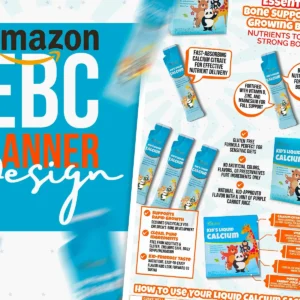
At the core of any successful campaign is the idea that high-converting banner colors can influence attention and action. By tapping into color psychology for banners, you can evoke trust, urgency, or excitement that nudges readers toward a click. Choosing the best banner color combinations requires balancing visibility, aesthetics, and brand alignment to maximize contrast and readability in banners. A strong CTA color impact on conversions often comes from high-contrast pairings that make the action button stand out without overpowering the offer. Finally, follow branding guidelines for banners so your performance gains stay durable across channels.
Viewed through a broader lens, banner color choice becomes a visual language that signals credibility, urgency, and value before visitors engage. A well-structured palette communicates with users using color theory for banners, emphasizing legibility and purpose over mere aesthetics. By focusing on contrast and readability across devices, designers ensure that messages translate into action regardless of screen size or lighting. Integrating brand guidelines into the color decisions helps maintain consistency while supporting measured improvements in performance. In practice, teams test palettes, compare engagement metrics, and refine hues to align with audience expectations.
Frequently Asked Questions
What are high-converting banner colors and how does color psychology for banners influence conversions?
High-converting banner colors are hues and contrasts that help capture attention and prompt action. Color psychology for banners guides choices to evoke trust (blue), urgency (red), or optimism, while pairing these with a strong CTA and brand-aligned hues; test variations to optimize conversions.
What are the best banner color combinations to boost conversions?
Best banner color combinations use high contrast for readability and emotional balance. Combine a dominant background with a contrasting CTA color and a supporting secondary hue, while keeping accessibility in mind and aligning with branding guidelines for banners. Test a few palettes to identify what converts best.
How does contrast and readability in banners impact performance, and how can you optimize it?
Contrast and readability in banners directly affect engagement and conversions. Ensure strong contrast between text and background, avoid color-only cues, and verify readability across devices; use accessible color ratios (WCAG) and consider overlays to maintain legibility.
How does CTA color impact conversions in banners, and how should you choose CTA colors?
CTA color impact on conversions depends on visibility and psychological cues. Choose CTA hues that contrast with the banner and align with brand personality (bright orange, red, or green are common), and test hover or animation to boost interaction while ensuring consistency with branding guidelines for banners.
How can you maintain branding guidelines for banners while maximizing conversions with high-converting banner colors?
Follow branding guidelines for banners to preserve brand identity: keep the primary brand color dominant, use a restrained secondary color for accents and CTAs, select legible typography, and ensure consistent color treatment across channels. These practices help maintain recognition while optimizing conversion potential.
| Focus Area | Key Points | Practical Takeaways |
|---|---|---|
| Understanding color psychology for banners | – Color psychology links colors to emotions and actions (e.g., blue = trust, red = urgency, green = growth, orange = action). – Perception varies with culture, brand personality, and audience. – Align colors with brand message and desired action. | – Choose colors that reflect brand and support the desired action. – Consider audience context and test variations when possible. |
| Choosing colors for high-converting banner colors: a practical framework | 1) Define objective (clicks, sign-ups, purchases). 2) Know your audience (regional/cultural color associations). 3) Start with branding warmth (use primary brand color). 4) Build palettes with dominant/background, accents, and a contrasting CTA. 5) Consider color harmonies (analogous vs. complementary). 6) Test, measure, optimize (A/B tests). | – Follow a branding-consistent palette with strong CTA contrast. – Test color variations to confirm performance. |
| Best banner color combinations to boost conversions | – High-contrast pairs (dark bg/light text or light bg/dark text). – Warm accents on cool bases. – Brand-first palettes with contrasting CTAs. – Accessible palettes meeting WCAG contrast. – Limited-swatch (2-3 core colors) to reduce cognitive load. | – Use high-contrast combinations for readability. – Reserve bold CTA colors that align with brand. – Keep palette simple and brand-centric. |
| Contrast and readability in banners | – Contrast between text and background must be easily legible on all devices. – Use dark text on light background or light text on dark background. – Test readability on multiple devices; ensure CTA and promos remain legible. – If using images, apply overlays or choose contrasting text colors. | – Prioritize readable typography and adequate contrast ratios. – Validate across devices. |
| CTA color impact on conversions | – CTAs should convey action, urgency, or positivity (orange, red, green often work). – Test CTA color against background to ensure visibility without overpowering the message. – Add hover or subtle animation to draw attention. | – Choose CTA colors that pop and align with brand values. – Utilize hover effects cautiously for engagement. |
| Branding guidelines for banners and consistency across channels | – Maintain primary brand color as the core in banners. – Use secondary colors to support messages, not distract. – Align typography and imagery with the color palette. – Adapt palettes for web, email, social, and ads while preserving identity. | – Ensure cross-channel consistency with clear brand signals. |
| Practical palettes and real-world examples | Palette A (Trust/clarity): navy bg, white text, lime CTA. Palette B (Energy/urgency): charcoal bg, bright orange CTA, white headlines. Palette C (Bold/accessible): black bg, pale gray text, vibrant teal CTA. Palette D (Brand-centric): brand color as background with lighter text and complementary CTA. | – Start with a palette and test two to three variations. – Measure CTR, conversions, and time-on-page to identify strongest performers. |
| When to use each palette and testing | – Use tests to isolate color as the variable. – Context, audience, and product category influence palette choice. – Compare two or three treatments within the same layout. | – Run small-scale tests to optimize color choice before full deployment. |
| Common mistakes to avoid | – Overloading with color leads to visual noise. – Poor accessibility due to low contrast or color-only messaging. – Inconsistent branding across banners and channels. – Ignoring context and localization. | – Keep color usage purposeful and accessible; align with brand. |
Summary
Conclusion: A thoughtful approach to color in banners blends color psychology, contrast, and branding to guide action. High-converting banner colors emerge when you balance emotional cues with accessible readability and consistent brand signals across channels. By defining objectives, testing palettes, and prioritizing contrast for readability, you optimize CTAs and engagements. Remember to test early and iterate—the most effective colors vary by audience, product, and context, but a disciplined framework anchored in branding guidelines for banners and color psychology for banners yields measurable improvements in CTR and conversions.