
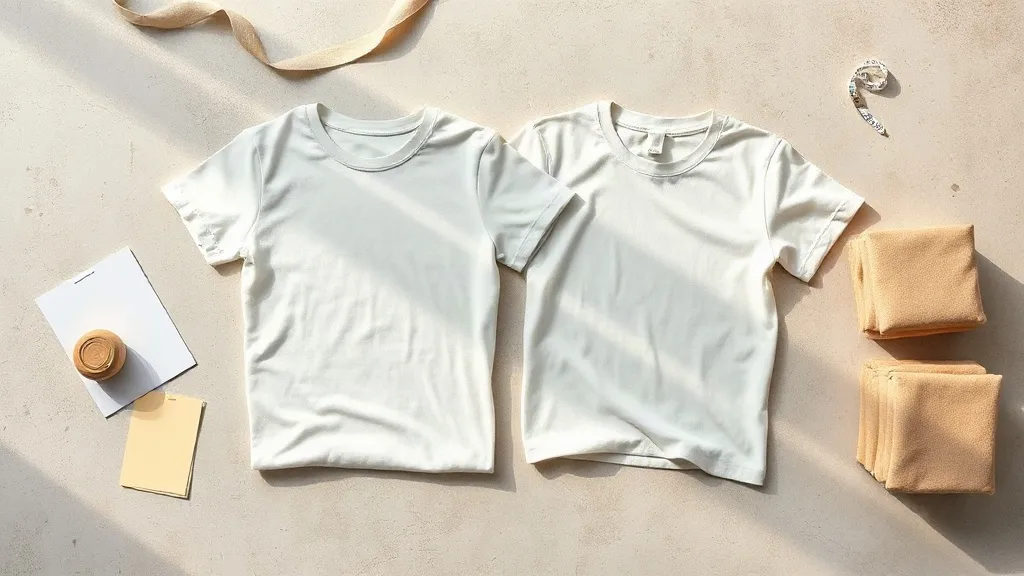
Choosing a blank tee sounds like a five-minute decision until the first reorder goes wrong. A shirt that prints beautifully but shrinks two sizes, or one that feels premium in photos yet pills after three washes, costs you reviews, returns and repeat customers. If you have spent any time sourcing heavyweight basics, you have probably landed on the same two names: shaka wear and smart blanks. Both have loyal followings, both show up in the same wholesale conversations, and both are frequently described as "the one you want" by people who swear by only one of them. This guide breaks down how the two lines actually differ in hand feel, construction, print behavior and pricing logic, so you can pick with your eyes open instead of guessing from a spec sheet.
Why the blank matters more than the design
Most print shops and small labels spend their energy on artwork and almost none on the garment underneath it. That is backwards. The blank determines how a print looks on day one, how it ages over twenty washes, and whether a customer reaches for that shirt again. A heavyweight cotton tee with a dense knit holds a screen print crisp and flat. A thin, loosely knit body lets ink sit on a textured surface that cracks along the grain. The difference is not cosmetic, it is the difference between a product people keep and a product people quietly retire to a drawer.
There is also a business layer. Blanks set your cost floor. If a blank runs small, you carry more size variance and more exchanges. If it runs inconsistent between dye lots, your product photos stop matching reality. When you evaluate shaka wear against smart blanks, you are really evaluating three things: how consistently the garment is built, how predictable its sizing is, and how well it survives the decoration methods you actually use.
Shaka Wear: heavyweight streetwear DNA
Shaka Wear built its reputation on weight and drape. The brand's core tees lean toward heavier cotton jersey, often in the 6 to 7 ounce range depending on the style, with a boxier cut and a structured shoulder. That combination is why the line shows up constantly in streetwear, skate and workwear-adjacent drops. The fabric has enough body to stand away from the torso rather than cling, which photographs well and reads as premium on a hanger.
What the hand feel tells you
Pick up a Shaka tee and the first impression is density. The knit is tight, the surface is smooth, and the collar holds a clean shape out of the bag. For screen printing, that density is a gift: plastisol sits on top with sharp edges, and water-based inks sink in evenly without wicking along the fibers. If you print large front graphics or heavy coverage, the body does not collapse under the ink weight.
Where it fits in a lineup
Shaka works best as your statement blank. It is the shirt you use when the product itself needs to signal substance, such as a boxy drop-shoulder tee, a heavyweight hoodie program, or a capsule where the fabric is part of the story. The trade-off is that heavier cotton takes longer to break in, and some customers who expect a soft, thin tee on arrival will read the weight as stiffness. Set expectations in your product copy and the feedback mostly disappears.
Smart Blanks: the practical everyday workhorse
Smart Blanks occupies a different lane. The line is built around versatility and accessible pricing, with a broad catalog that covers tees, fleece, tanks and youth sizes across a wide color range. Where Shaka leans into a specific aesthetic, Smart Blanks leans into coverage: more styles, more colors, more sizes, all designed to slot into a print-on-demand or bulk order workflow without drama.
Consistency and sizing
The strongest argument for smart blanks is predictability. Sizing tends to run closer to standard retail expectations, which matters enormously if you sell to customers who order their usual size and expect it to fit. For shops running repeat corporate or event orders, that reliability reduces the back-and-forth that eats margin. Color matching across restocks is generally solid too, which keeps your mockups honest.
Print performance across methods
Smart Blanks handles the full spread of decoration reasonably well. Screen printing, DTG, heat transfer vinyl and embroidery all land without surprises on the mid-weight styles. Because the fabric is lighter than a true heavyweight, DTG output tends to feel softer and more integrated, which many direct-to-garment shops prefer. The one caveat: on the very lightest styles, high-opacity plastisol with heavy coverage can add noticeable stiffness, so adjust your mesh count or go water-based for large areas.
Side-by-side comparison
- Fabric weight: Shaka Wear generally runs heavier, giving a structured, boxy silhouette. Smart Blanks sits in the mid-weight range with a more conventional drape.
- Fit: Shaka tends toward a roomier, streetwear-oriented cut. Smart Blanks follows closer to standard retail sizing.
- Catalog breadth: Smart Blanks wins on style, color and size range. Shaka is more focused, which is helpful when you want a tight, consistent program.
- Pricing logic: Smart Blanks is typically the more budget-friendly entry point for volume. Shaka's heavier construction justifies a higher unit cost that you pass on through perceived quality.
- Best decoration match: Shaka suits bold screen print and embroidery. Smart Blanks suits DTG, small-batch transfers and mixed-method shops.
How to decide without ordering blind
Order samples. Not one, three. Wash two of them and keep one unwashed as a control. Compare the collar after the wash cycle, check for torque along the side seam, and measure the body length against the spec sheet. This is the single habit that separates shops with low return rates from shops that fight them constantly.
Then match the blank to the use case rather than picking a favorite. If you run a streetwear label where weight is the selling point, a heavyweight shaka wear body does more marketing work than any caption you write. If you run a print-on-demand store with hundreds of SKUs across colors and sizes, smart blanks gives you the coverage and consistency that keeps operations simple. Plenty of successful shops carry both and route orders by product type, which is often the smartest answer of all.
One more practical note: check your supplier's restock cadence before you commit to a color as a permanent part of your line. A perfect blank that goes out of stock for six weeks will hurt more than a slightly imperfect one you can reorder on demand.
Frequently asked questions
Is Shaka Wear true to size or should customers size down?
Shaka styles generally run roomier than standard retail tees, especially in the boxier cuts. Most customers who want a regular fit should take their usual size, while those who prefer a closer fit often size down one. Always publish garment measurements rather than relying on size labels alone.
Can Smart Blanks handle high-volume DTG printing?
Yes. The mid-weight cotton used across most Smart Blanks tees takes DTG ink well, and the resulting print tends to feel soft because the fabric is not overly dense. Pre-treat according to your printer's settings and wash-test a sample before committing to a large run.
Which blank is better for embroidery?
Heavier fabrics generally support denser embroidery with less puckering, so Shaka Wear has an edge for large chest or back designs. For small left-chest logos, either line works fine as long as you use appropriate backing and stabilize the fabric properly.
Do these blanks shrink after washing?
Both are cotton-based and will shrink to some degree, particularly on the first hot wash. Expect modest length shrinkage on most styles. Washing cold and tumble drying low keeps shrinkage predictable, and it is worth stating that care guidance clearly on your product pages.
Can I mix both brands in one store?
Absolutely, and many shops do. Use the heavier line for hero products where fabric quality is the pitch, and the broader catalog line for volume, color variety and quick-turn orders. Keep the two clearly separated in your product descriptions so customers understand why one tee costs more than another.